International interdisciplinary conference
AI Perspectives 2026
International Conference on Philosophy, Society and Technology
19-20 November 2026
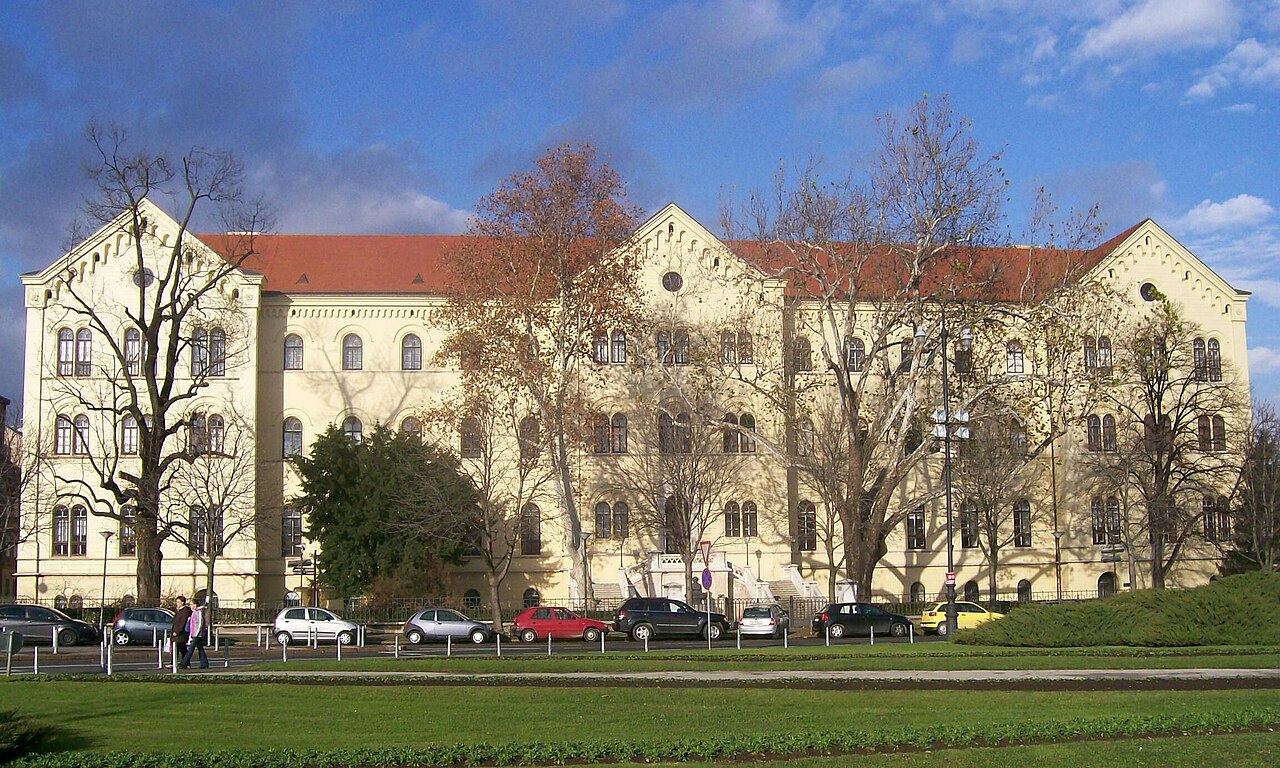
Faculty of Croatian Studies
University of Zagreb, Croatia
About the Conference
Critical dialogue on artificial intelligence and contemporary society
Artificial Intelligence is rapidly transforming nearly every aspect of contemporary society. Beyond technological innovation, AI raises profound philosophical, ethical, legal, social, economic, and educational questions that increasingly influence the way we live, work, communicate, and govern.
AI Perspectives 2026: Philosophy, Society and Technology is an international interdisciplinary conference organised on the occasion of World Philosophy Day. The conference aims to provide a platform for critical dialogue on the opportunities and challenges created by Artificial Intelligence while fostering collaboration between academia, students, industry, entrepreneurs, investors, and the broader technology ecosystem.
Our objective is to bridge the gap between theoretical reflection and practical innovation by bringing together experts from philosophy, computer science, sociology, psychology, law, economics, business, and related disciplines.
Conference Themes
Contributions are welcome across a wide range of AI-related topics
The conference welcomes contributions including, but not limited to, the following topics:
Call for Papers
Submit original research for presentation at AI Perspectives 2026
The Organizing Committee invites researchers, academics, doctoral candidates, and professionals to submit original research for presentation at the International Conference AI Perspectives 2026: Philosophy, Society and Technology, to be held on 19-20 November 2026 at the Faculty of Croatian Studies, University of Zagreb.
The conference welcomes interdisciplinary contributions addressing philosophical, ethical, social, legal, economic, educational, technological, and business aspects of Artificial Intelligence.
Submission Guidelines
Authors are invited to submit an abstract of up to 2,500 characters, including spaces, presenting original, unpublished research relevant to the conference themes. The abstract should clearly describe the research objectives, methodology where applicable, principal findings or expected results, and the significance of the contribution.
All submissions will undergo a double-blind peer-review process conducted by members of the Scientific Committee. Accepted abstracts will be included in the official conference programme.
Authors of accepted contributions will be invited to present their work at the conference. Following the event, they will have the opportunity to submit a full paper for consideration in the peer-reviewed conference proceedings, subject to a separate review process.
Important Dates
Key deadlines for authors and participants
Abstract Submission Deadline
Notification of Acceptance
Conference
Conference Format
Two days of research, discussion, workshops, and networking
Day 1
- Opening Ceremony
- Keynote Lectures
- Scientific Sessions
- Conference Dinner
Day 2
- Student Research Session
- Workshops
- Industry and Academic Panels
- Networking Event
Who Should Attend?
A meeting point for academic, professional, and public communities
- Researchers
- University professors
- PhD candidates
- Students
- AI professionals
- Technology companies
- Entrepreneurs
- Investors
- Public and private sector organisations
- Anyone interested in the future of Artificial Intelligence
Publication
Selected papers will be considered for publication
Selected papers presented at the conference will be considered for publication in the conference proceedings following a peer-review process.
Committees
Scientific and organizing committees
Scientific Committee
- Assoc. Prof. Marko Kardum, PhDConference ChairUniversity of Zagreb, Croatia
- Lovre de Grisogono, PhDConference SecretaryUniversity of Zagreb, Croatia
- Asst. Prof. Erik Brezovec, PhDUniversity of Zagreb, Croatia
- Amnon Dekel, PhDHebrew University of Jerusalem, Israel
- Prof. Jean-Gabriel Ganascia, PhDSorbonne University, France
- Asst. Prof. Andrej Jandrić, PhDUniversity of Belgrade, Serbia
- Prof. Damir Krstinić, PhDUniversity of Split, Croatia
- Prof. Michael R. Lissack, PhDTongji University, China
- Assoc. Prof. Sandro Skansi, PhDUniversity of Zagreb, Croatia
- Asst. Prof. Vanesa Varga, PhDUniversity of Zagreb, Croatia
Organizing Committee
- Assoc. Prof. Marko Kardum, PhDConference ChairUniversity of Zagreb, Croatia
- Lovre de Grisogono, PhDConference SecretaryUniversity of Zagreb, Croatia
- Asst. Prof. Erik Brezovec, PhDUniversity of Zagreb, Croatia
- Assoc. Prof. Ivana Greguric, PhDUniversity of Zagreb, Croatia
- Assoc. Prof. Željka Metesi Deronjić, PhDUniversity of Zagreb, Croatia
- Asst. Prof. Vanesa Varga, PhDUniversity of Zagreb, Croatia
- Aco Momčilović, MAPresident of Global AI Ethics Institute
- Lucija Pušonjić, mag. educ. phil.University of Zagreb, Croatia
- Ana Funarić, univ. bacc. soc.University of Zagreb, Croatia
- Mariela Markić, bacc. edu. phil.University of Zagreb, Croatia
Keynote Speakers
Leading perspectives on AI and society
Amnon Dekel
Intersections Between AI and Human Behavior: Toward Human-Centered Principles for an Age of Accelerating Disruption
The rapid diffusion of generative artificial intelligence represents not merely another stage of technological development, but a significant acceleration in the pace at which technological disruption enters everyday life, organizations, and labor markets. This talk examines the intersection between AI-driven disruption and fundamental dimensions of human behavior, with particular attention to work, meaning, personal agency, and social stability.
Kristina Šekrst
Who Put I in AI? Five Neurons and the Philosophy of Mechanistic Interpretability
Mechanistic interpretability research attempts to understand large language models by tracing the internal circuits responsible for particular behaviors, but it remains unclear how much of a model must be understood before conclusions about the system as a whole can be justified. This talk examines how training and post-training processes shape what models say about themselves, questioning whether statements such as “I feel” or “I am conscious” can provide meaningful evidence of machine consciousness. It argues that interpretability can encourage overly broad conclusions from limited internal evidence, particularly when researchers are already looking for indicators of consciousness.
Damir Krstinić
AI on the Fire Line
Wildfires are an increasing threat, making rapid detection and effective information support crucial for successful intervention. This talk presents an integrated AI-based system developed in Croatia over more than two decades, which uses video analysis for early wildfire detection and currently operates at almost 150 locations with nearly 300 cameras. Drawing on a continuously growing archive of real-world wildfire data, the system demonstrates how AI can support firefighters throughout the wildfire management cycle—while keeping trained professionals at the centre of decision-making and intervention.
Michael Lissack
Always Question: Trustworthy Human–AI Collaboration as the Contesting of Ground
Debates about trustworthy AI typically locate trust in properties of the system, such as accuracy, robustness, and explainability. This talk argues instead that trust in human–AI collaboration depends on a capacity AI cannot itself exercise: the human ability to question the grounds, assumptions, and consequences behind its outputs. It proposes “always question” as a practical discipline—treating AI outputs as claims to be tested rather than answers to be adopted, and keeping consequential judgment firmly in human hands.
Venue
Faculty of Croatian Studies
University of ZagrebFaculty of Croatian Studies
Borongaj Campus
Borongajska cesta 83d
10 000 Zagreb, Croatia
19-20 November 2026
Open in Google Maps